The Living Tapestry of Yorkshire Heritage
The Wensleydale Longwool is one of Britain”s most distinctive heritage sheep, a large, commanding animal developed in the valleys and uplands of North Yorkshire. Its presence is unmistakable: a powerful frame, a clean and elegant head, and a fleece that falls in long, shining ringlets rather than forming a dense, woolly mass. For breeders and conservation flock owners, however, the breed”s appeal reaches beyond appearance. The Wensleydale is a carefully balanced combination of scale, wool quality, maternal usefulness, and structural strength.
At first glance, the breed standard seems to celebrate visual drama. White Wensleydales are known for blue skin visible on the muzzle, ears, and other exposed areas, while the fleece should be bright, lustrous, long, and arranged in open curls. A well-presented animal may look almost sculptural, with the traditional forelock or topknot framing the head and the fleece flowing evenly over the body. Guidance from the Wensleydale breed standard makes clear that these traits are not ornamental accidents. They are expressions of breed identity that must sit on a sound, useful sheep.
The foundation story reaches back to 1838, when a Dishley Leicester ram crossed with a Teeswater ewe produced the celebrated ram Bluecap. His influence helped establish the combination of size, pigmentation, and exceptional longwool character associated with the modern Wensleydale. Breed-standard compliance should therefore be read as a biological blueprint rather than a show-ring checklist. Correct skin, fleece, teeth, feet, legs, chest, loin, and reproductive anatomy collectively indicate whether an animal can remain healthy, mobile, productive, and resilient under real pasture conditions.
The Legacy of Bluecap and the Hallmarks of True Skin Pigmentation
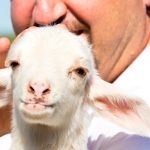
Bluecap”s importance lies not simply in his place within breed history, but in the traits he helped anchor. The Wensleydale was shaped from longwool ancestry selected for both scale and fleece value, and the resulting type became recognizable for its blue-grey dermal pigmentation. In a white sheep, the skin beneath the muzzle, around the eyes, and across the ears should show a deep, even blue tone. The colour may vary in intensity, but it should look like genuine underlying pigmentation rather than a superficial stain on the hair or wool.
Authentic pigment is best assessed where the skin is exposed and clean. Mud, feed residue, sun-darkened wool, healed injury, or staining from environmental contamination can mislead an inexperienced evaluator. The muzzle should be broad and well formed, the ears should be carried alertly and angled upward, and the head should rise cleanly from a strong neck and shoulder. A sound head is not merely attractive; it supports effective grazing, normal breathing, good visual awareness, and correct dental assessment.
When classifying animals, pigmentation should be considered alongside general vitality. A sheep that carries correct colour but is narrow, weak on its pasterns, poorly grown, or chronically vulnerable to pasture challenges should not be retained solely because it looks striking. Conversely, a faded or unevenly presented animal deserves careful examination before rejection if its underlying skin, fleece, and structure are sound. The following points help keep classification practical:
- Inspect the exposed skin after cleaning the muzzle and ears, distinguishing pigment from dirt, scarring, or staining.
- Look for a broad muzzle, correct bite, alert ears, and a smooth transition from head to neck.
- Assess colour together with body condition, growth, feet, mobility, and general thriftiness.
- Record minor spots or unusual markings according to the rules of the relevant registration society.
- Do not allow an attractive head or dark skin to outweigh serious defects in structure or reproductive soundness.
The Anatomy of the Aristocratic Ringlet and Fleece Mechanics
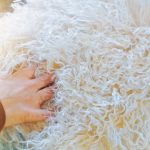
The Wensleydale fleece is built from individual locks or staples that should be long, open, and clearly defined. Each staple contains a regular arrangement of fibre, with a gentle crimp and a characteristic spiral or ringlet at the tip. Ideally, the curls continue through the length of the staple and remain distinct rather than merging into a compact, cotted surface. The North American association records typical fibre measurements of approximately 33 to 35 microns, staple lengths of 8 to 12 inches, and yearling fleeces commonly weighing between 13 and 20 pounds, although age, nutrition, climate, and management affect individual results.

Lustre depends on the physical structure of the fibre and the condition of the fleece. A smooth fibre surface reflects light, producing the bright sheen valued in Wensleydale wool. Adequate nutrition, freedom from disease, effective parasite control, and a balanced mineral supply help support normal fibre growth. Stress, illness, prolonged wetting, fleece rot, heavy vegetable contamination, and repeated mechanical disturbance can weaken the staple and encourage felting or break. The best fleece should remain open and silky, without excessive cotting, brittle tips, or a dry, chalky appearance.
Coverage must be examined over the whole sheep, not just across the shoulder where wool is often at its best. The foretop should be well developed, while the neck, shoulders, back, ribs, britch, belly, and points should carry consistent longwool coverage. Wool-free areas required for cleanliness, particularly around the belly and scrotum, should not be confused with poor overall coverage. The table below provides a practical comparison for breeding assessment.
| Desirable fleece trait | Potential fault | Why it matters |
|---|---|---|
| Bright, silky lustre | Dull, dry, or chalky appearance | May indicate undesirable fibre character, poor condition, or reduced processing value |
| Long, even staples | Short, uneven, or broken staple | Reduces yield, handle, and suitability for longwool products |
| Open, defined ringlets | Cotting, felting, or merged locks | Complicates shearing and can impair scouring and spinning |
| Consistent curl to the tips | Tippy, weathered, or straight-ended locks | Suggests weather exposure, fibre weakness, or inconsistent fleece character |
| Kemp-free, clean wool | Hair, heavy vegetable matter, or staining | Contamination lowers clip value and may interfere with processing |
| Useful body coverage | Thin areas across belly, points, or hindquarters | Indicates a departure from the preferred breed type and reduces fleece weight |
Skeletal Soundness and Structural Conformation on Pasture
A mature Wensleydale is a substantial grazing animal. Breed guidance places mature rams at about 150 kilograms and ewes at approximately 100 kilograms, subject to condition and management. Such weight requires a reliable framework. The ideal animal should be powerful but correctly proportioned, with substantial bone, a deep and wide chest, well-laid shoulders, a broad loin, and long, well-fleshed hindquarters. A large sheep that lacks structural integrity will struggle to convert its size into productive longevity.
Legs and feet deserve particular attention because heavy longwools may travel considerable distances across wet, compacted, or uneven ground. Legs should be straight and correctly positioned, with adequate spacing behind and strong, springy pasterns. Pasterns that are excessively upright can create concussion and stiffness, while weak or collapsing pasterns compromise mobility and increase wear on the foot and lower limb. Examine animals walking naturally, not only standing squarely for inspection. Short, uneven steps, persistent lameness, toe dragging, or reluctance to move should prompt veterinary assessment before any breeding decision.
The rump should provide useful length and moderate slope, while the loin should be broad enough to support body capacity and muscle. A deep chest allows room for heart and lungs, and a correctly proportioned pelvis supports maternal function and lambing ease. These traits do not guarantee an unassisted birth, since nutrition, litter size, lamb presentation, and ewe condition remain important, but they contribute to a more functional ewe. Teeth should meet the edge of the upper dental pad, with age-related variation interpreted carefully. Rams should have two even, appropriately sized testicles and no scrotal hernia.
- Check shoulder placement, chest depth, rib shape, loin width, and hindquarter length.
- Watch the sheep walk across firm and uneven ground to assess balance and stride.
- Reject or investigate cow hocks, excessively close hind legs, weak pasterns, and unstable feet.
- Look for sway back, severe roach back, narrow pelvic structure, or a disproportionate frame.
- Assess teeth, udder, scrotum, and general body condition as part of the same breeding examination.
Husbandry Practices to Protect Longwool Integrity and Shearing Quality
Long, open fleece is valuable, but it also collects more material from the environment than a short, dense fleece. Paddocks should therefore be managed to reduce access to loose hay, straw, burrs, thistles, and seed-bearing weeds. Feed racks should limit spillage, and bedding should be kept dry and clean. Before shearing, sheep should be held in a clean area away from feed, hay, and straw. A professional shearer is especially important for inexperienced keepers, as careful handling improves welfare and reduces second cuts that can break a valuable long staple into short fragments.
Shearing should take place in a clean, well-organized shed with attention to biosecurity between groups. Fleeces should be separated by breed, colour, sex, age, and quality where practical. Belly wool, tags, daggings, and crutchings should be removed as the fleece is handled, rather than being allowed to contaminate the main body wool. The shoulder, neck, back, and central body often provide the cleanest and most consistent fibre, while the britch, legs, and belly may be coarser, dirtier, or more heavily weathered. Skirting is not wasted effort: it protects the value of the premium portion of the clip.
Humid weather and prolonged rainfall increase the risk of fleece rot, staining, mud contamination, and flystrike. Regular inspection around the breech, tail, belly, and shoulders is essential, particularly during warm, wet periods. Any suspected flystrike requires immediate treatment under veterinary or approved livestock-health guidance. After shearing, fleeces should be rolled with the cut side inward, kept free from excessive compression, and stored in breathable paper or fabric sacks. Plastic can trap moisture, causing sweating, mildew, and fibre degradation. The shearing and storage sequence is best organized as follows:
- Prepare clean handling facilities and move sheep away from hay, straw, and dusty feed before shearing.
- Use an experienced shearer, maintain clean equipment, and minimize second cuts and excessive disturbance.
- Remove belly wool, dags, tags, stained portions, and heavily contaminated sections during initial skirting.
- Sort fleeces by colour, age, sex, staple length, lustre, crimp, lock formation, and overall cleanliness.
- Roll sound fleeces carefully and place them in labelled, breathable sacks or approved wool sheets.
- Store the clip in a cool, dry, dark environment, checking periodically for moths, dampness, and contamination.
Safeguarding the Longwool Standard for Generations Ahead
The Wensleydale standard is strongest when its traits are considered together. Blue-grey skin reflects inherited breed character, but it should accompany a healthy head, sound bite, alert carriage, and good general vigour. Lustrous ringlets demonstrate valuable fibre structure, but only when the fleece remains open, clean, well covered, and manageable through the shearing season. Large size is meaningful when supported by strong pasterns, straight legs, adequate chest capacity, a broad loin, and a pelvis capable of supporting productive motherhood.
Conservation breeders should resist decorative extremes that sacrifice movement, longevity, lambing ease, or fleece health. A registered breeding animal must be more than impressive in a photograph or on a show stand. It should be able to graze, maintain condition, withstand seasonal weather, produce a useful clip, and contribute sound offspring. The following checklist provides a practical final screen when selecting a ram or replacement ewe lamb:
- Is the animal genuinely thrifty, alert, and capable of maintaining condition on the intended pasture?
- Does the skin show appropriate pigmentation, with a correct head, ears, muzzle, and bite?
- Are the fleece locks long, open, lustrous, evenly curled, kemp-free, and adequately distributed?
- Are the feet, pasterns, legs, back, loin, chest, and hindquarters structurally sound?
- Does the ewe lamb show maternal potential, and does the ram meet reproductive soundness requirements?
- Are any minor faults outweighed by clear functional strengths, or would they compound existing weaknesses in the flock?
Careful selection preserves more than a visual style. It protects the biological integrity of a Yorkshire longwool whose value rests on the union of fleece excellence, working structure, and dependable husbandry. When breeders evaluate the whole animal and manage the fleece from clean pasture to breathable storage, the Wensleydale standard remains a living resource rather than a static description, capable of serving both conservation and practical agriculture for generations ahead.